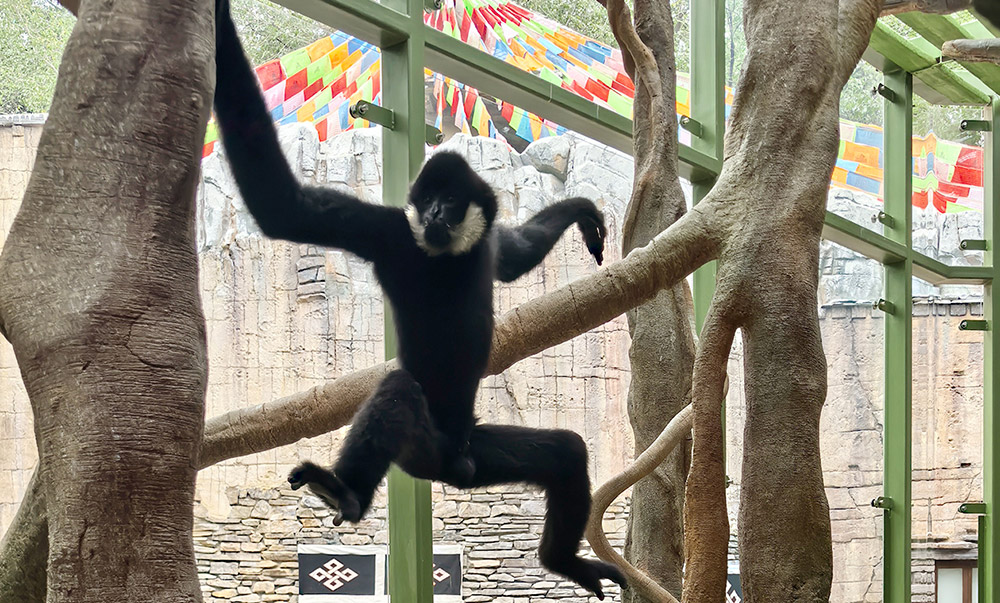
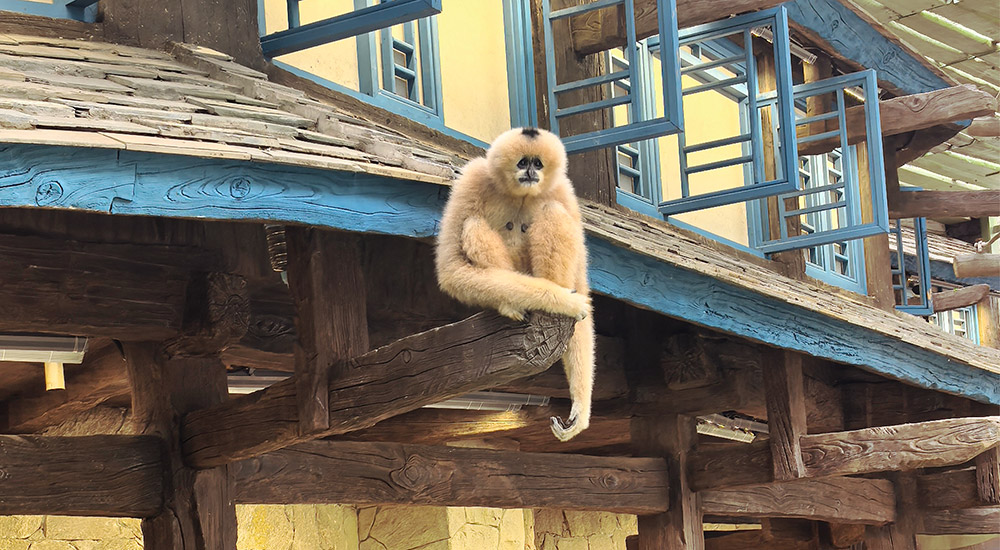
Northern White-cheeked Gibbons are tailless.Adult males are completely black except for white cheeks that extend from the chin to above the ears, with a prominent crest and concealed ears.Adult females are yellowish, with only an indistinct black crown patch, and white fur around the face that usually does not form a complete ring.Newborn infants are nearly hairless and gradually turn yellow. They begin to darken at 6 months old, with cheek hairs turning white. Males remain black into adulthood, while females gradually turn yellow after reaching sexual maturity.
They mainly feed on various tropical wild fruits (berries, drupes, nuts, especially figs), tender leaves, flower buds and tree shoots. They also eat insects, small birds and bird eggs.
They live in small groups of 3–5 individuals, occasionally up to 7–8.In the dry season, they usually start activities and morning calls at around 06:30.There are three feeding peaks: 07:00–08:00, 11:00–12:00 and 14:00–15:00.Foraging, moving, playing and resting are all group activities. The distance between individuals during foraging does not exceed 70 meters.They typically hang from branches with one hand and pick food with the other, alternating hands.Most foraging takes place in the upper and middle parts of tall tree crowns at heights of 10–25 meters.

 Official WeChat Account