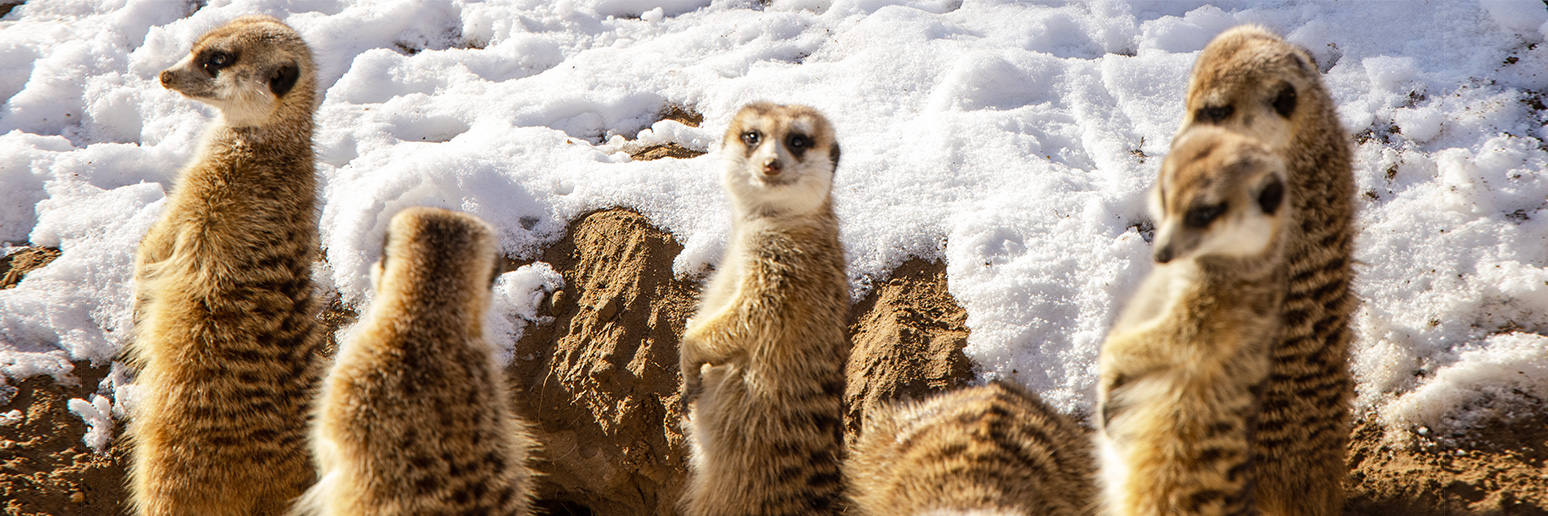
Winter temperatures in Beijing can drop as low as -15°C. Our staff use scientific and meticulous measures to ensure the animals live safely and healthily in the severe cold.
During extreme cold, keepers closely monitor the animals’ physical responses and behavioral changes—such as curling up motionlessly, decreased appetite, or shivering despite fluffy fur—which are signs of insufficient cold resistance. Once abnormalities are found, the environmental temperature is immediately adjusted or warming measures are taken to help the animals quickly return to a comfortable state.
Most animals in the park have access to temperature-controlled indoor shelters, where they can freely choose to go indoors to escape wind, snow and low temperatures according to their own needs.
For animals that choose to stay outdoors, staff provide a rich selection of keep warm and cold-resistant options, allowing them to independently choose the most comfortable way to keep warm. Most habitats are equipped with wind- and snow-proof structures as well as insulation facilities. As temperatures continue to drop, keepers actively take various measures to keep the animals warm, including:
High-Calorie“Energy Meals”
For large carnivores such as Siberian tigers and African lions, the diet ratio is adjusted to increase the supply of fresh meat. For herbivores such as giraffes and giant elands, high-nutrition feeds like black beans and alfalfa hay are added. This enables the animals to take in more energy, enhance their cold resistance, and maintain normal body temperature.
Warm "Nests" “Bedding ;Materials
For animals such as jaguars and ring-tailed lemurs, heating pads or warm nests covered with soft hay are placed in their living areas. For poikilothermic animals like tortoises and crocodiles, heating pads are laid in their exhibition boxes, paired with heat lamps to stabilize the environmental temperature within a suitable range, ensuring their physiological activities are not affected by low temperatures.
Wind and Snow Protection Facilities
Wind protection facilities or enrichment structures are installed at key locations in outdoor exhibition areas to block direct cold winds. In case of snowfall, staff promptly clear snow from the habitats while retaining some snow for the animals to play with, balancing both warmth and natural behavioral needs.
Species-Specific Warming Plans
For animals from cold zones, such as Arctic foxes and Arctic wolves, which already have thick fur to withstand the severe cold, staff still set up hidden spaces in their habitats to recreate their native environment. For tropical animals like parrots and lizards, they stay in constant-temperature exhibition halls throughout the winter, with the indoor temperature stably maintained at 25–28°C. Additionally, the lighting duration is increased to simulate a tropical climate, helping them spend the winter smoothly.